


1. Introduction: The Role of Gypsum Powder in Artificial Stone Production
Artificial stone, often referred to as engineered or cultured stone, has become a cornerstone of modern construction and interior design. Its popularity stems from its versatility, durability, and aesthetic appeal, which can mimic natural stone at a fraction of the cost. At the heart of this industry lies a crucial material: high-quality gypsum powder. The quality of the gypsum powder directly influences the final product’s strength, texture, setting time, and overall performance. Producing this essential powder requires specialized equipment that can efficiently process raw gypsum rock into a fine, consistent, and reactive powder. This guide is designed to walk you through the critical aspects of selecting gypsum powder production equipment, ensuring that your investment leads to a profitable and sustainable manufacturing operation. We will explore key machinery, their functions, and crucial buying considerations, with a focus on solutions that meet the demands of the artificial stone sector.
2. Understanding the Gypsum Powder Production Process
Before diving into equipment selection, it is essential to understand the step-by-step process of gypsum powder production, particularly for artificial stone applications. The process typically involves several stages, each requiring specific machinery:
- Crushing: Raw gypsum rock is first reduced in size using jaw crushers or impact crushers to a manageable diameter, usually around 20-50mm, to facilitate further grinding.
- Grinding (Pulverizing): This is the heart of the operation. The crushed gypsum is fed into a grinding mill, where it is pulverized into a fine powder. The fineness and particle size distribution of this powder are critical for the hydration reaction that occurs when water is added to create artificial stone.
- Calcination (optional but common for β-hemihydrate): For many artificial stone products, gypsum needs to be partially dehydrated (calcined) to form calcium sulfate hemihydrate (Plaster of Paris). This is often done in a rotary kiln or a boiling furnace, but it can also be integrated into the grinding process using specialized mills like the vertical roller mill, which combines drying and grinding.
- Classification and Collection: The ground powder must be separated by particle size. Air classifiers or sieves ensure that only powder meeting the desired fineness specifications proceeds to the next stage. Dust collection systems (e.g., pulse bag filters) capture the fine particles, ensuring environmental compliance and product recovery.
- Storage and Packaging: The finished gypsum powder is stored in silos to maintain its properties before being packaged or transported to the artificial stone production line.
3. Key Equipment for Gypsum Powder Production
3.1 Crushing and Pre-Processing
The initial crushing stage prepares the raw material for the grinding mill. For gypsum, a Jaw Crusher or an Impact Crusher is typically employed. The choice depends on the hardness and size of the run-of-mine gypsum. For most artificial stone raw gypsum, a jaw crusher is a robust and reliable primary crusher, offering a reduction ratio of up to 6:1 and producing a uniform discharge. This is a crucial step to ensure efficient later grinding.
3.2 The Grinding Mill: The Core of the System
This is arguably the most important piece of equipment. Several mill types are available, each with its own advantages. For gypsum powder production in the artificial stone industry, the following are highly relevant:
- Raymond Mill: is a classic and cost-effective solution for producing gypsum powder with a fineness between 613μm to 44μm (which corresponds to 25-325 mesh). It is suitable for small to medium-scale operations and materials with a Mohs hardness below 7, which gypsum readily is. Its versatility and lower initial investment make it a popular choice for many producers.
- MW Micro Powder Mill: When a finer particle size is required for high-quality artificial stone, the MW Micro Powder Mill is an excellent choice. It is capable of producing powder between 325 mesh and 3250 mesh (d97 ≤ 5μm). Its high precision and ability to produce superfine powder can give your artificial stone product a smoother finish and greater density.
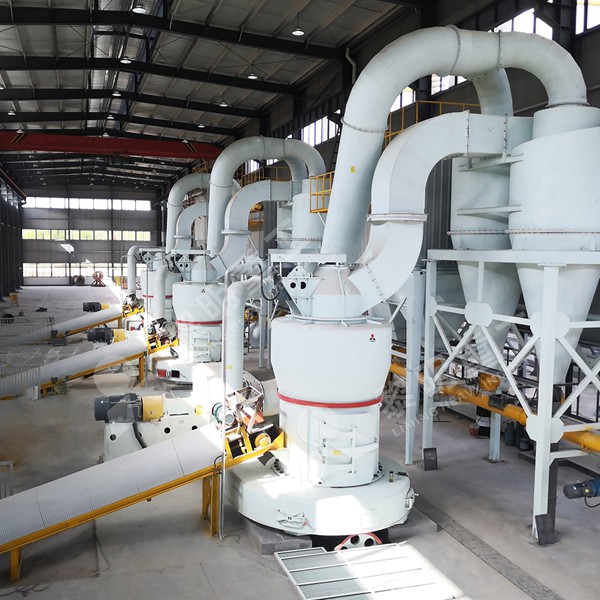
- LM Vertical Roller Mill: This is an advanced, integrated system that combines drying, grinding, and classification. For large-scale producers or those dealing with gypsum that contains some moisture, the LM Vertical Roller Mill is unmatched in efficiency. It utilizes a large in-built classifier, offering precise fineness control and a high capacity (10-400 T/H). It can also handle a feed size of up to 55mm, eliminating the need for a secondary crusher in many cases.
- Ball Mill: A traditional but very reliable method for grinding. It is often used when very high reduction ratios or specialized media are required. Ball mills are known for their robustness and ability to grind very hard materials. For gypsum in artificial stone production, it can be applied but might be less energy-efficient than a vertical mill or Raymond mill for the same task.
3.3 Classification and Conveying
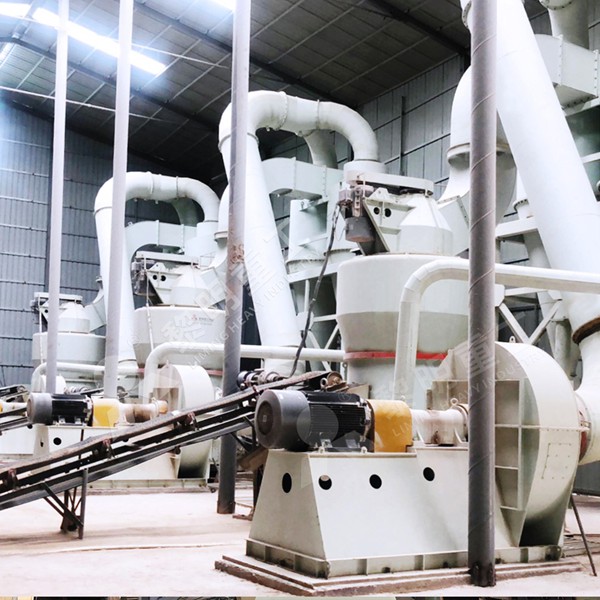
After grinding, the fine powder needs to be separated and collected. In modern mills like the LM Vertical Roller Mill, the classification is done internally. In others like the Raymond Mill, a separate classifier is used. A Pulse Dust Collector is a standard complement to any grinding mill to capture the powder from the air stream, ensuring a clean production environment and recovering valuable product.
4. Selection Criteria for Optimal Performance
Choosing the right equipment is a complex decision. Here are the key criteria to guide your purchase:
4.1 Required Fineness and Capacity
For artificial stone production, gypsum powder fineness is typically required to be between 100 and 200 mesh, with some premium applications requiring 325 mesh or finer. Determine the exact particle size distribution needed for your specific artificial stone formula. Your required production capacity in tons per hour will dictate the size and model of the mill. For example, a plant producing 10 tons per hour will have very different needs than a plant producing 40 tons per hour. Optimizing these parameters prevents over-investment or operational bottlenecks.
4.2 Material Characteristics
Gypsum can contain varying levels of moisture (free and crystalline). If your raw gypsum has high moisture (e.g., >10%), you will need a mill with a strong drying capability, like the LM Vertical Roller Mill, which can handle drying and grinding in one step using hot air. The hardness and abrasiveness of the gypsum will also affect the wear rates of the grinding parts. Gypsum is relatively soft, which is why Raymond Mills are effective. However, if there are impurities like silica, you must consider more wear-resistant materials for the mill parts.
4.3 Energy Efficiency and Operating Costs
Energy is a significant cost in powder production. Newer mill designs, such as the vertical roller mill, are significantly more energy-efficient than older ball mills or Raymond Mills, often saving 20-30% of energy consumption. Consider the total cost of ownership, including power consumption, spare parts replacement (grinding rings, rollers), and maintenance time. Look for equipment with a low-maintenance design and reliable components.
4.4 Environmental Compliance and Footprint
Modern manufacturing cannot ignore environmental regulations. Any grinding mill you choose must be equipped with highly efficient dust collection systems. A negative pressure system throughout the milling process is essential. Also, consider the physical footprint of the equipment. A compact plant layout, like that offered by the LM Vertical Mill setup, can reduce construction costs and work-in-progress inventory. Always verify that the equipment can be paired with a pulse jet dust collector that complies with national or local air quality standards.
4.5 Supplier Reliability and After-Sales Support
The supplier’s history, R&D capability, and service network are crucial. You are not just buying a machine; you are investing in a partnership. Look for a company with a strong track record in the mineral processing industry. After-sales service, including installation supervision, commissioning, and training, is vital for the smooth launch of your line. A company that offers a comprehensive trial and testing center can be a significant advantage, allowing you to validate your gypsum’s performance before installation.
5. Our Solutions: Liming Heavy Industry Systems
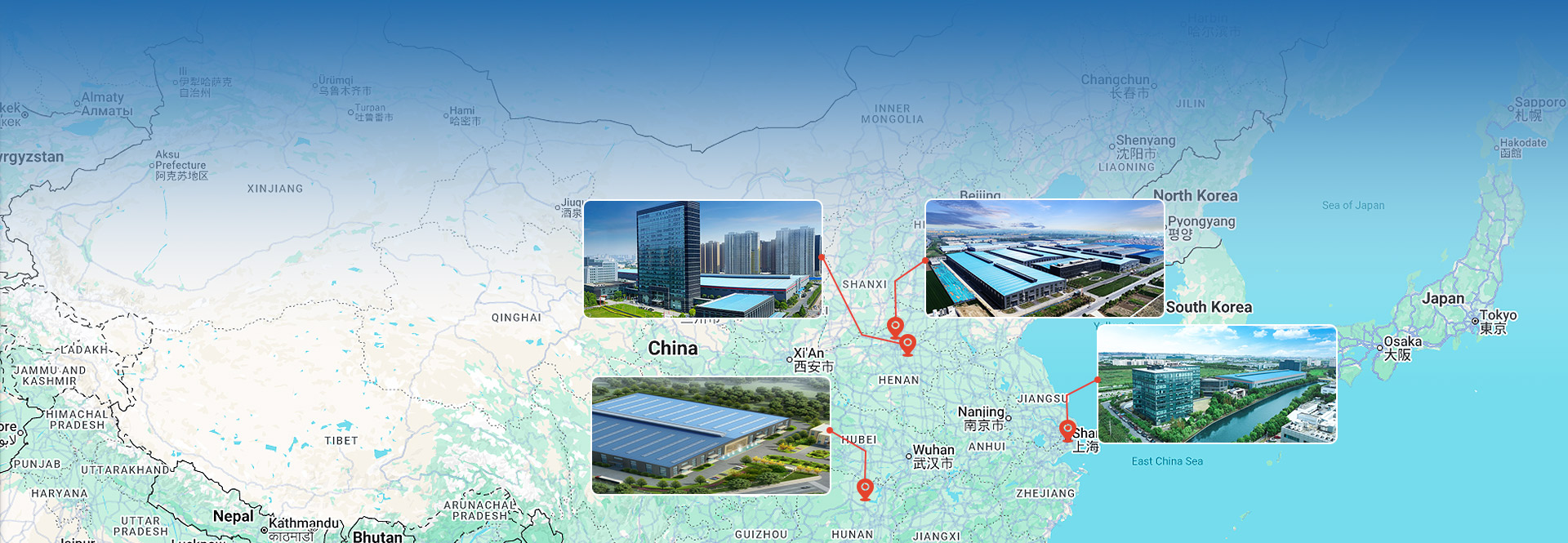
With over 30 years of experience and a leading position in the grinding industry, Liming Heavy Industry offers a full range of solutions tailored to gypsum processing. Let’s look at how our key products address your needs.
5.1 Raymond Mill for Middle-Scale Production
Details: Our Raymond Mill is the industry standard for many non-metallic mineral processing applications. It is engineered for high throughput and efficient operation for capacities ranging from 1.2 to 4.5 T/H. The machine features an automatic control system and a pulse dust collector to ensure clean and safe operation.
Advantages for Gypsum: It is an cost-effective entry point for many artificial stone pre-processing lines, offering excellent consistency and is particularly well-suited for grinding gypsum to meet the typical fineness requirements (80-325 mesh). It is characterized by low noise and minimal vibration, maintaining a stable production environment.
5.2 MW Micro Powder Mill for Premium Artificial Stone
Details: For manufacturers who seek to produce high-end artificial stone with superior brightness and compactness, fineness is key. Our MW Micro Powder Mill has a capacity of 0.5-25 T/H and can adjust its output fineness between 325-2500 mesh, far exceeding the standard requirements. This allows you to experiment with advanced formulas and create a distinctive product.
Advantages for Gypsum: The MW mill can easily produce superfine gypsum powder, which can potentially reduce the required amount of bindex in your artificial stone mix, lowering overall material costs while improving the stone’s surface smoothness. Its production process is green, featuring a pulse precipitator to eliminate dust leakage.
5.3 The Versatile LM Vertical Roller Mill
Details: As an advanced solution, we offer the LM Vertical Roller Mill. It is ideally suited for medium and large-scale installations with capacities from 10-400 T/H. This system integrates drying, grinding, and classifying into a single unit, which simplifies the process flow and dramatically reduces the plant footprint and civil engineering costs.
Advantages for Gypsum: With an input size of up to 55mm, the LM mill can handle the primary and secondary crushing stages in one go, saving the cost of secondary crushers. For gypsum that requires calcination (drying), the mill can utilize the dedicated hot air furnace, making it an energy-efficient Calcination system itself for producing building gypsum (β-hemihydrate) without needing a separate rotary kiln.
6. FAQ
FAQ 1: What is the ideal fineness of gypsum powder for making artificial stone?
The ideal fineness for artificial stone typically ranges between 120 mesh (about 124 μm) and 200 mesh (about 74 μm). For high-quality surfaces and dense structures, fineness around 250 mesh is often recommended. Your specific mix design and the type of artificial stone (e.g., gypsum-based vs. cement-based with gypsum additives) will determine the exact particle size distribution you need. Our mills can easily achieve that.
FAQ 2: Can I use a single mill for both crushing and calcination (drying) of gypsum?
Yes, absolutely. A well-engineered LM Vertical Roller Mill can combine grinding and drying using hot air. However, for ‘pure’ calcination that transforms gypsum (CaSO4·2H2O) into calcium sulfate hemihydrate, the process typically requires heating to 150-180°C. Our vertical mill can facilitate this stage by using a hot air furnace, providing the necessary temperature while grinding, which is a highly efficient way to produce β-hemihydrate gypsum for artificial stone.
FAQ 3: What are the main operational costs to consider for gypsum grinding equipment?
The main costs are energy consumption (kWh per ton of product), installation costs, and maintenance. Energy efficiency varies by mill type. For example, our LM Vertical Mill can be 20-30% more energy efficient than a ball mill of similar capacity. Maintenance includes spare parts like grinding rings and rollers for Raymond Mills, or the table and rollers of a vertical mill, which are subject to wear. By choosing a more durable mill, you can reduce downtime and the frequency of replacement.
FAQ 4: How does the after-sales and spare parts support look like for Liming Heavy Industry?
We understand that downtime is expensive. As Liming Heavy Industry, we provide comprehensive after-sales services. This includes project planning, on-site installation guidance, machinery commissioning, and operator training. We have a global distribution network for spare parts, ensuring quick availability of wear parts like grinding rings, rollers, and wear-resistant liners. Our engineering team is also available for remote consultations to help troubleshoot and optimize your process.
7. Conclusion
Investing in gypsum powder production equipment for artificial stone manufacturing is a significant capital decision. The right equipment can provide you with a stable output, consistent quality, and a competitive edge. Focus on the grinding mill as the core of your operation, and consider your raw material’s properties and your final product’s specifications. We at Liming Heavy Industry, with our history dating back to 1987 and extensive experience in the grinding industry, are a reliable partner to help you through this selection process. Our team is ready to assist you in designing a line that is efficient, sustainable, and profitable. Contact Liming Heavy Industry to discuss your specific project requirements and arrange a test run at our facility.