


Introduction: The Role of Limestone Flour in Poultry Nutrition
In modern poultry farming, the quality of feed directly determines the health, growth rate, and egg production of birds. One of the most critical components in poultry rations is calcium, which is essential for bone formation, eggshell strength, and metabolic functions. Limestone flour (calcium carbonate powder) is the most cost-effective and widely used source of calcium in poultry diets. However, the efficacy of this supplement depends entirely on its particle size distribution and fineness. For layers, a coarse particle size (2–4 mm) helps with calcium retention in the gizzard, while for broilers, finer powders (0.1–0.5 mm) are preferred for rapid digestion. This is where industrial grinding equipment becomes indispensable. Without proper milling machinery, producers cannot achieve the precise granulometry required by feed formulation standards. Consequently, investing in the right grinding solution is not a mere operational choice—it is a strategic decision that affects flock performance, eggshell quality, and overall profitability.
The production of limestone flour involves several stages: primary crushing, intermediate grinding, and fine pulverization. Each stage demands different types of equipment with specific capacities, energy efficiencies, and wear resistance. Moreover, the abrasive nature of calcium carbonate requires machines designed for longevity and minimal contamination. This article explores the best mills and grinding machines for producing limestone flour, focusing on the technologies offered by Liming Heavy Industry Co., Ltd. With over 30 years of experience in manufacturing crushing and grinding equipment, Liming provides solutions that range from small-scale operations to high-capacity industrial plants.
Key Considerations for Selecting Limestone Grinding Equipment
Before delving into specific machines, it is essential to outline the parameters that influence equipment selection. First, the target fineness (measured in mesh or microns) dictates the type of mill. For example, a Raymond mill can produce 80–325 mesh powders, while a micro powder mill can achieve 325–3250 mesh. Second, the capacity required (tons per hour) defines the equipment size and model. Third, the moisture content of the raw limestone (typically less than 6%) affects the drying requirements. Fourth, the hardness of the stone—usually below 7 on the Mohs scale for limestone—determines whether a high-pressure roller mill or a ball mill is more suitable. Finally, environmental regulations necessitate dust collection systems, which are often integrated into modern grinding plants. Liming Heavy Industry’s product line addresses all these factors with precision engineering and patented technologies.
Additionally, operational costs such as energy consumption, wear part replacement frequency, and maintenance downtime must be evaluated. For poultry feed producers, continuous operation with minimal interruptions is vital. Thus, choosing a mill with robust construction and easy-to-replace wear parts is paramount. Liming’s equipment is designed with automated control systems, reducing human error and ensuring consistent product quality.
Raymond Mill: The Classic Workhorse for Medium-Capacity Production
When it comes to grinding limestone into flour for poultry feed, the Raymond Mill remains one of the most trusted and versatile machines. Liming Heavy Industry’s Raymond Mill is specifically engineered for processing non-flammable and non-explosive materials with Mohs hardness under 7 and humidity below 6%. It offers an output fineness ranging from 613 µm to 44 µm (equivalent to 30–325 mesh), which perfectly covers the particle size requirements for both broiler and layer feed formulations. The mill operates on a centrifugal pendulum principle: the grinding roller swings outward under centrifugal force and presses against the grinding ring. This mechanism ensures a uniform particle size distribution, which is critical for the homogeneous mixing of calcium in feed.
The capacity of this model ranges from 1.2 to 4.5 tons per hour, making it ideal for small to medium-sized poultry feed plants. Its compact footprint allows for easy integration into existing production lines. Moreover, the Raymond mill is equipped with an electromagnetic vibrating feeder and a blower, creating a closed-loop circulation system that minimizes material loss. For producers who prioritize simplicity, low initial investment, and steady performance, the Raymond mill is an excellent choice. It is particularly effective for calcium carbonate processing, gypsum, and other non-metallic minerals.
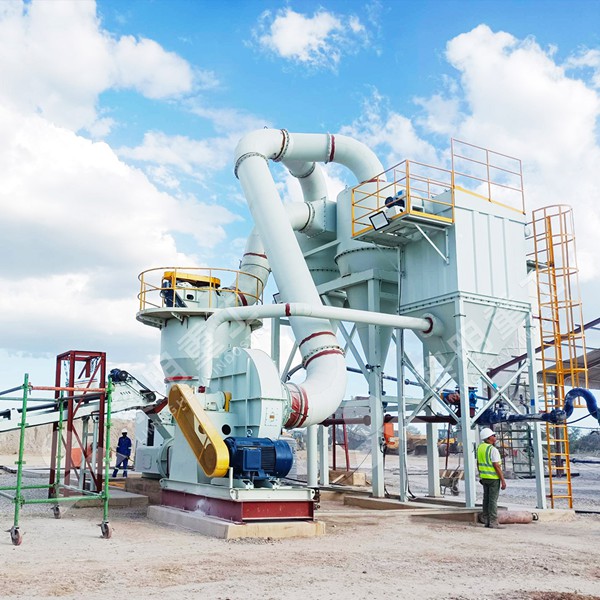
In practice, many poultry farms use a Raymond mill to produce limestone flour with a final particle size of 0.2 mm to 0.5 mm. This fineness allows for rapid dissolution in the bird’s digestive tract, ensuring immediate calcium availability. However, for those requiring higher capacities or finer powders, Liming’s other products offer advanced solutions.
MTW European Type Trapezium Mill: Upgraded Efficiency for Large-Scale Operations
For large-scale poultry feed producers with continuous production lines, the MTW European Type Trapezium Mill represents the pinnacle of grinding technology. As the successor to the traditional Raymond mill, the MTW mill incorporates patented technologies that significantly enhance productivity and energy efficiency. Its capacity ranges from 3 to 55 tons per hour, and it accepts input sizes of 30–50 mm, eliminating the need for secondary crushing in many cases. The output fineness is adjustable between 1.6 mm (12 mesh) and 0.045 mm (325 mesh), providing flexibility to produce either coarse grits for layer hens or fine powders for starter feeds.
One of the standout features of the MTW mill is its integrated drying, grinding, powder selection, and conveying functions. The system includes a jaw crusher, vibrating feeder, hopper, dust collector, and electric cabinet, all working in harmony. The use of a variable-frequency belt feeder ensures even and continuous material flow, preventing overloading and ensuring consistent product quality. The internal separator classifies particles, returning oversized ones for regrinding while guiding fine powders to the collector. Moreover, the pulse dust collector meets stringent environmental standards, making it a responsible choice for modern facilities.
The grinding principle of the MTW mill involves rollers pressing against a trapezium-shaped ring, which increases the grinding area by 50% compared to traditional designs. This results in higher grinding efficiency and lower energy consumption per ton of finished product. The main base is made of high-quality cast steel, and the reducer is a bevel gear drive system, ensuring smooth and quiet operation. For producers aiming to expand production capacity without compromising on quality, the MTW European Type Trapezium Mill is an unmatched investment.
LM Vertical Roller Mill: Integrated Solution for High-Volume and Drying Needs
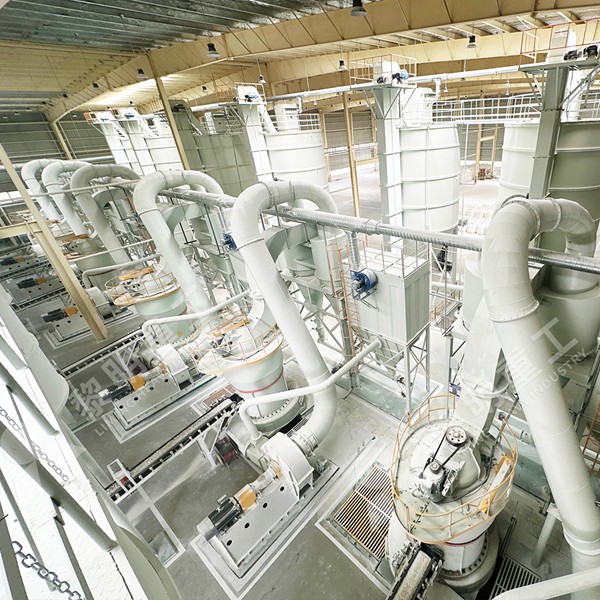
When limestone contains slightly higher moisture or when the plant requires a single machine to handle drying, grinding, and classification simultaneously, the LM Vertical Roller Mill is the optimum choice. This equipment integrates drying, grinding, powder selection, and conveying in one unit, significantly simplifying the process flow. The LM vertical mill can process up to 400 tons per hour, making it suitable for mega-scale poultry feed facilities or centralized mineral processing centers. Its input size tolerance of 30–55 mm allows it to accept primary crushed material directly, reducing capital expenditure on additional crushers.
The working principle of the LM mill involves a rotating grinding table and stationary rollers. The material is fed onto the center of the table and moves outward under centrifugal force. As it passes under the rollers, it is crushed and ground. Hot air or gas enters the mill from the nozzle ring, drying the material and carrying the fine particles to a high-efficiency classifier. The classifier adjusts the fineness by controlling the rotor speed, ensuring that the final product meets the exact specifications for poultry feed. Oversized particles fall back to the table for further grinding, creating a continuous and efficient cycle.
This mill is particularly advantageous for producing limestone flour with a tight particle size distribution, which is crucial for ensuring uniform calcium content in every feed pellet. Additionally, the LM vertical mill features an automatic electric control system that monitors vibration, temperature, and pressure, ensuring safe and stable operation. From a sustainability perspective, its high grinding efficiency reduces power consumption, and the enclosed system prevents dust emissions. For large-scale producers who prioritize throughput and operational excellence, the LM Vertical Roller Mill is the definitive solution.
Micro Powder Mill: For Ultra-Fine Calcium Powders
In certain segments of poultry farming, especially for medicated feed or starter rations for chicks, ultra-fine calcium carbonate (d97 ≤ 5 µm) is required. Liming Heavy Industry’s MW Micro Powder Mill addresses this niche. Drawing on advanced Swedish grinding technology, this mill achieves fineness levels between 325 mesh (45 µm) and 3250 mesh (5 µm). It is designed for high-precision grinding of calcium carbonate, gypsum, and other non-metallic minerals. The capacity ranges from 0.5 to 25 tons per hour, accommodating specialty producers.
The mill’s operation involves a main shaft driven by a reducer, which rotates multiple rollers against a ring. Material is crushed by a hammer crusher, then fed into the mill via a vibrating feeder. The powder is classified by a high-speed air classifier, ensuring that only particles meeting the target size exit the chamber. This strict control over particle size is essential because excessive fine dust can cause respiratory issues in birds, while overly coarse particles pass through the digestive system undigested. The MW micro powder mill, equipped with a pulse precipitator, offers a green solution with low noise and vibration.
Although the capacity is lower than that of vertical mills, the MW micro powder mill is indispensable for producing specialized calcium supplements used in eggshell quality enhancers. Poultry nutritionists often recommend a blend of fine and coarse particles to optimize calcium absorption across different times of day. Therefore, having the capability to produce both fractions in-house gives feed producers a competitive edge.
Ball Mill: A Reliable Alternative for High-Volume Grinding
The Ball Mill remains a relevant option for limestone flour production, particularly when combined with a classifier for fine grinding. Liming’s ball mill is common in the industry due to its robust construction and ability to handle various materials. It uses steel balls as grinding media, which impact and grind the material as the cylinder rotates. The capacity ranges from 0.65 to 50 tons per hour, and the input size is limited to ≤25 mm. This mill is often used in series with an air classifier to produce fine powders for poultry feed.
One advantage of the ball mill is its low operating cost and simple maintenance. However, it is less energy-efficient than vertical roller mills and tends to produce a broader particle size distribution. For this reason, it is seldom the first choice for premium limestone flour producers unless the plant requires a multi-purpose grinding unit. In summary, while the ball mill is a dependable workhorse, Liming’s Raymond and MTW mills offer superior efficiency for limestone applications.
Why Choose Liming Heavy Industry Equipment?
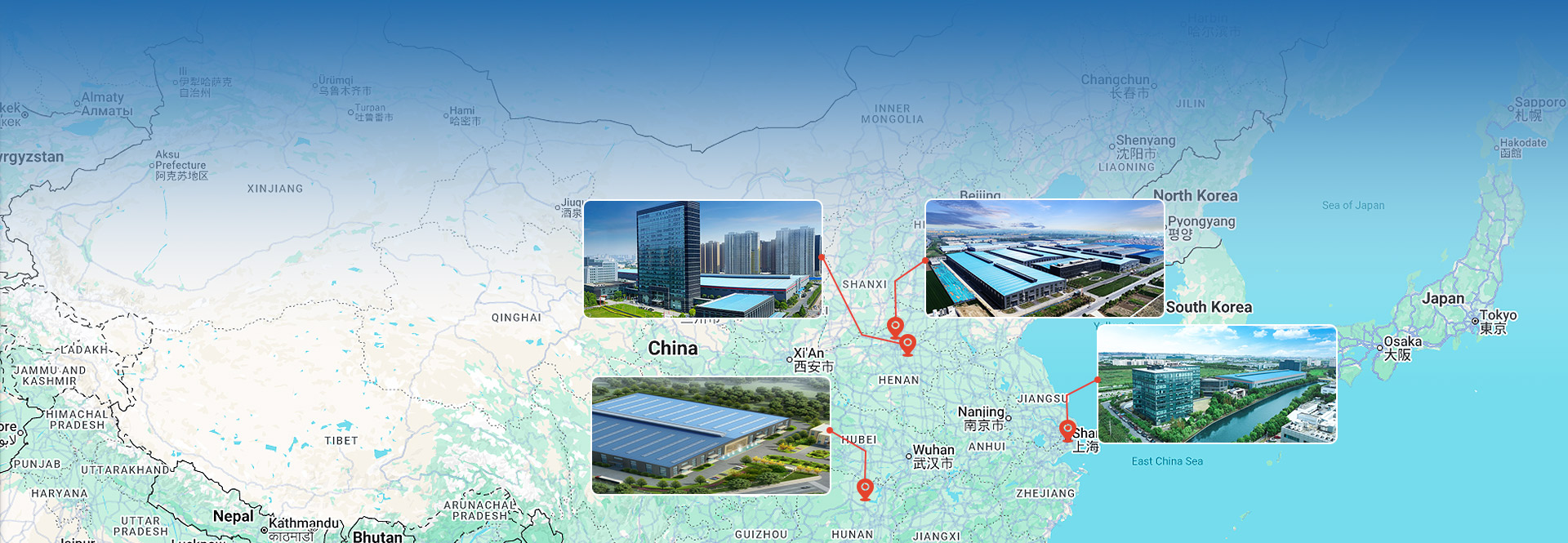
Liming Heavy Industry Co., Ltd., founded in 1987, has established itself as a leader in the manufacturing of crushing and grinding equipment. With headquarters in the HI-TECH Industry Development Zone of Zhengzhou, covering 80,000 m², and an additional workshop in Shangjie Industry Park spanning 67,000 m², the company boasts modern scientific management and precision manufacturing capabilities. Over 30 years of innovation has resulted in a product portfolio that includes the LM Vertical Roller Mill, Raymond Mill, MTW European Type Trapezium Mill, MW Micro Powder Mill, and Ball Mill—each engineered to deliver optimal performance in mineral processing.
For the poultry industry, Liming’s equipment guarantees several advantages. Firstly, all mills are designed to handle abrasion-heavy limestone without significant wear, thanks to the use of high-chromium alloy wear parts. Secondly, the companies’ commitment to environmental protection is evident in the integrated dust collection systems. Thirdly, the after-sales support includes installation guidance, operator training, and a responsive spare parts supply. Finally, Liming’s scientific research team continuously improves product efficiency, aligning with the technological frontier of the grinding industry.
We recommend the MTW European Type Trapezium Mill for most poultry feed producers due to its balance of capacity, fineness control, and energy efficiency. For those with very high throughput requirements (above 50 t/h), the LM Vertical Roller Mill is the ideal flagship solution. Both machines embody the quality and reliability that Liming Heavy Industry is known for worldwide.
Conclusion
Producing limestone flour for poultry farming is a technical process that demands precision machinery. The choice of mill depends on scale, target fineness, and operational budget. Liming Heavy Industry offers a comprehensive range of grinding machines, from the versatile Raymond mill to the high-capacity LM vertical mill. By selecting the appropriate equipment, poultry feed manufacturers can ensure a consistent supply of high-quality calcium, promoting healthier flocks and higher productivity. Investing in Liming’s technology is not merely a capital purchase; it is a partnership for sustainable growth in the poultry sector.
FAQ
1. What is the ideal particle size of limestone flour for layer hens?
For layer hens, a mix of coarse (2–4 mm) and fine (0.1–0.5 mm) limestone is recommended. Coarse particles remain in the gizzard and release calcium slowly, especially at night, while fine particles provide immediate calcium for eggshell formation. Liming’s MTW mill can produce both fractions by adjusting the classifier speed.
2. Can Liming grinding machines handle limestone with high moisture content?
Yes. The LM Vertical Roller Mill is equipped with an integrated drying system that can handle materials with up to 15-20% moisture by using hot air. The Raymond mill and MTW mill are suitable for materials with less than 6% moisture, as per standard specifications.
3. What is the daily energy consumption of an MTW mill producing 10 tons of limestone flour?
Energy consumption depends on feed size and fineness. Typically, the MTW mill consumes around 20-25 kWh per ton of finished product for 200-mesh limestone flour. However, Liming’s energy-efficient design reduces this by up to 15% compared to older Raymond mills.
4. Is it necessary to use a dedusting system with these mills?
Absolutely. Limestone grinding generates fine dust, which is hazardous to health and violates environmental regulations. All Liming mills are compatible with pulse-jet dust collectors, which capture over 99% of particulate matter, ensuring a clean and safe working environment.