

1. Introduction: The Importance of Limestone Powder Milling
Limestone is one of the most versatile and widely used industrial minerals. From construction aggregates to flue gas desulfurization in power plants, from agricultural soil conditioners to fillers in plastics, paint, and rubber, limestone powder plays a pivotal role across numerous industries. The quality and fineness of the final powder are critical determinants of its application value, making the milling process — and particularly the choice of grinding mill — a crucial factor in the economics and efficiency of any production line.
Selecting the right equipment is not merely about reducing the particle size; it is about optimizing energy consumption, ensuring equipment longevity, minimizing maintenance downtime, and achieving a consistent product specification. This article will explore the key considerations for choosing limestone powder milling equipment, highlight the technological advancements from a leading global manufacturer, and provide a guide to matching your operational needs with the right machine. As a pioneer in the industry since 1987, LIMING Heavy Industry Co., Ltd. offers a comprehensive range of solutions designed to meet every grinding challenge.
2. Key Factors in Choosing a Limestone Grinding Mill
Before delving into specific machine models, it is essential to understand the parameters that dictate the selection process. The wrong choice can lead to prohibitive operating costs or an inability to meet product quality standards.
2.1 Feed Size and Hardness: Limestone typically has a Mohs hardness of 3-4. While it is moderately soft, the feed size (which can range from 15mm to 55mm depending on the primary crusher) significantly impacts the grinding efficiency. Machines like Raymond mills and MTW European Type Trapezium Mills accept larger feed sizes, reducing the need for secondary crushing.
2.2 Required Fineness (Mesh Size): The desired output particle size dictates the mill type. For coarse powders (80 mesh to 400 mesh), Raymond Mill or MTW Trapezium Mill are ideal. For finer powders (325 mesh to 3250 mesh or even d97 ≤ 5μm), a Micro Powder Mill (like the MW series) is more appropriate. Ball mills offer flexibility but may be less energy-efficient for fine grinding.
2.3 Capacity Requirements: Your required tonnage per hour (TPH) is the primary economic driver. High-throughput operations (10-400 T/H) will necessitate vertical roller mills (LM series) or large-scale ball mills. Mid-level production (3-55 T/H) aligns with the MTW series, while smaller operations (1-4.5 T/H) may opt for the classic Raymond Mill.
2.4 Moisture Content: If the limestone contains more than 6% moisture, drying during grinding becomes essential. The LM Vertical Roller Mill excels in this area as it integrates drying, grinding, and classification in a single unit, utilizing hot air to evaporate moisture efficiently.
3. Technological Solutions: The Liming Heavy Industry Advantage
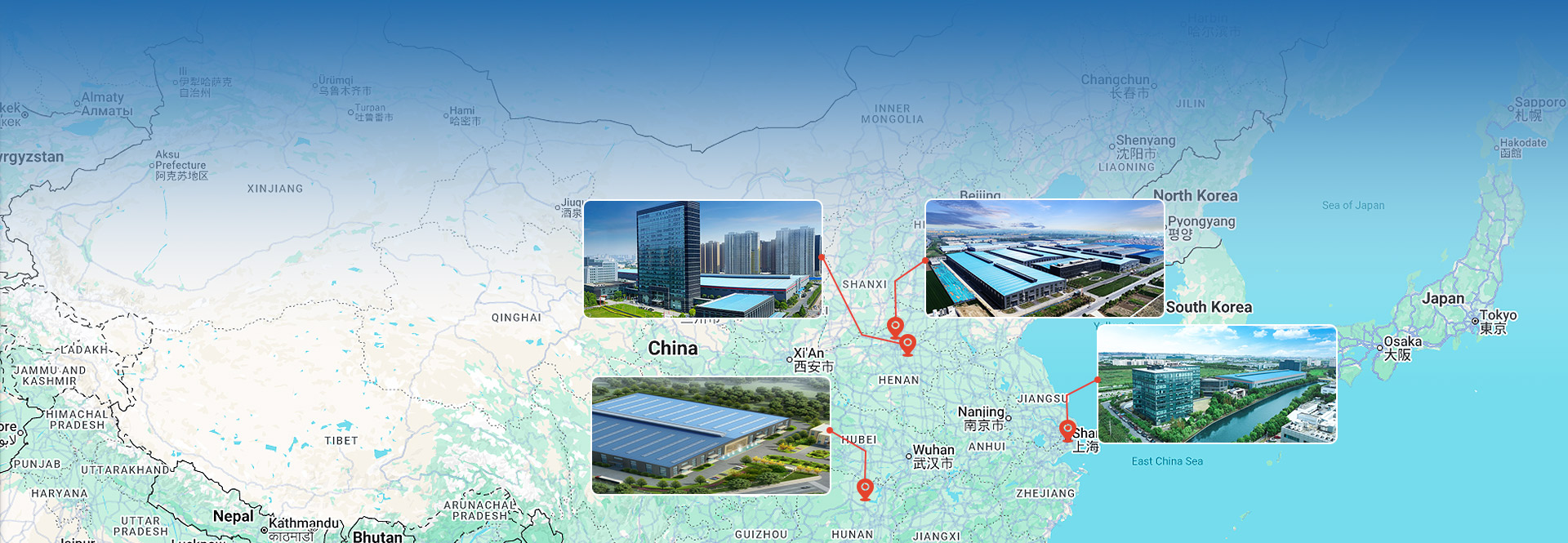
With over three decades of engineering expertise, LIMING Heavy Industry Co., Ltd. has refined a portfolio of milling solutions that combine innovation, reliability, and high productivity. Our headquarters in Zhengzhou’s HI-TECH Zone and our 67,000 m² workshop in Shangjie Industrial Park house state-of-the-art manufacturing and R&D capabilities. Below is an analysis of our primary offerings for limestone powder production.
3.1 LM Vertical Roller Mill: For Large-Scale Industrial Production
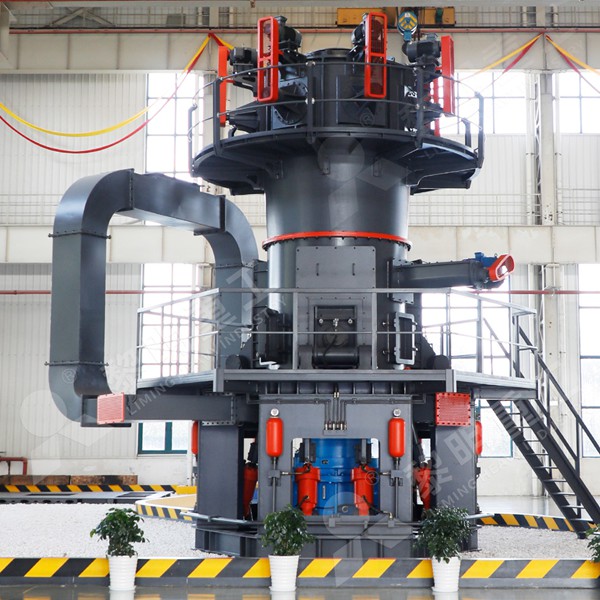
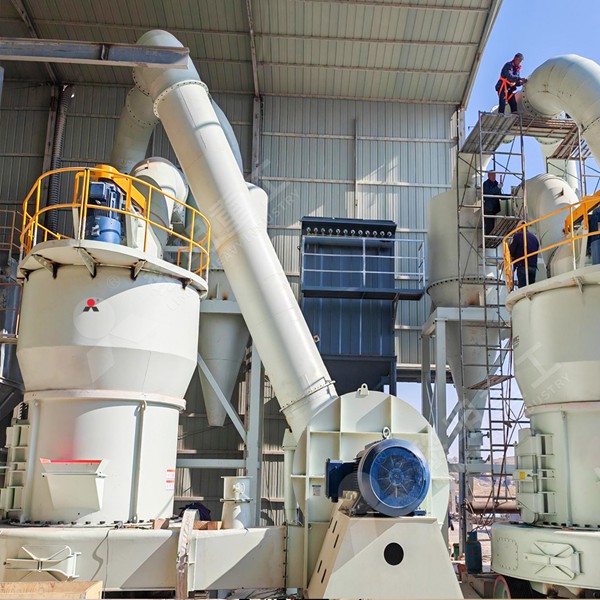
The LM Vertical Roller Mill represents the pinnacle of large-scale grinding efficiency. Integrating drying, grinding, powder selection, and pneumatic conveying, it is designed for massive throughput (10-400 T/H) and accepts feed sizes up to 55mm. This mill is the preferred solution for cement plants, power stations, and slag processing, focusing on non-metallic minerals and coal. Its advanced automatic electronic control system ensures stable operation and uniform product quality, making it a cornerstone for high-capacity limestone desulfurization lines.
3.2 MTW European Type Trapezium Mill: The Upgrade for Mid-Range Capacity
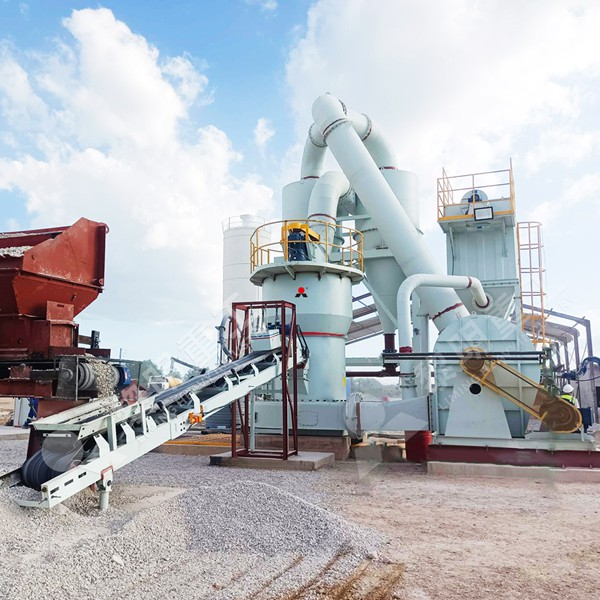
For operations looking for the classic performance of a pendulum or Raymond mill but with enhanced, patented technology, the MTW European Type Trapezium Mill is the upgraded solution. It processes 3-55 TPH with feed sizes of 30-50mm, achieving fineness between 613μm and 44μm. Its internal circulation system, featuring a variable-frequency belt feeder and a pulse dust collector, is fully enclosed and meets the strictest environmental standards. This mill is perfect for heavy calcium carbonate processing and power plant desulfurization where stability is key. We highly recommend the MTW series for mid-sized producers who prioritize environmental protection and lower energy consumption without sacrificing capacity.
3.3 Raymond Mill & MW Micro Powder Mill: For Specific Fineness
For smaller operations (1.2-4.5 T/H), the classic Raymond Mill remains a rugged and reliable workhorse. For applications demanding superfine powders such as in chemical or specific filler markets, the MW Micro Powder Mill is the absolute top performer, achieving d97 ≤ 5μm (up to 3250 mesh). This mill uses advanced Swedish technology for fine grinding applications, making it an environmentally friendly choice for high-end products.
4. Case Scenario: Building a Turnkey Limestone Powder Line
Imagine a producer needing 50 T/H of 200-mesh limestone powder for a desulfurization plant. The system would typically consist of a jaw crusher to reduce rock to 30-50mm, a vibrating feeder, and the main grinding unit. With our MTW Heavy Duty model (the MTW series can be scaled to meet up to 55T/H), the process would flow smoothly: the vibrating feeder supplies material continuously, the mill grinds it between the ring and rollers, and the built-in separator classifies the powder. Oversized particles fall back for regrinding, while qualified fines are collected by the pulse dust collector. The entire airflow is recycled, making it a highly efficient closed circuit.
For a company requiring 150 T/H of raw meal powder, we would recommend the LM Vertical Roller Mill. Its ability to simultaneously dry and grind wet raw materials cuts down on external drying costs, and its low maintenance roller design ensures high availability. The integrated automatic control system allows for one-person operation of the entire line, reducing labor costs.
5. Economic and Environmental Considerations
At LIMING Heavy Industry, we understand that grinding is one of the most energy-intensive processes in mineral handling. Our machines are engineered with cutting-edge internal structures to reduce vibration and power consumption. For instance:
- Reduced Power Consumption: The LM mill consumes about 30-40% less energy than a ball mill for the same capacity.
- Low Wear Costs: The rollers and grinding rings in our mills are made of high-chrome wear resistant alloys, extending service life significantly.
- Environmental Compliance: All our mills, including the Ball Mill and MW series, are compatible with efficient pulse dust collectors. These ensure zero dust leakage and lower noise levels, complying with global green manufacturing standards.
The initial capital expenditure is only one part of the cost. Years of laborsaving automation, low part replacement frequency, and consistent quality make LIMING equipment the most profitable investment in the long run. Our service team from the Xi’an and Zhengzhou bases provides lifetime support for our clients.
6. Conclusion
Choosing the right limestone milling equipment requires a careful balance of feed parameters, desired fineness, and tonnage. Whether you need a massive LM Vertical Roller Mill for a 400 T/H plant, a versatile MTW European Type Trapezium Mill for a 50 T/H line, or a superfine MW Micro Powder Mill for specialized fillers, LIMING Heavy Industry Co., Ltd. offers a tailored solution. Since 1987, our commitment to scientific research and product innovation has made us a leader in crushing and grinding equipment. We invite you to consult our engineers to design the optimal system for your needs.
FAQ: Frequently Asked Questions
Question 1: How do I decide between a Raymond Mill and an MTW Trapezium Mill?
Answer: For capacities under 10 TPH and fineness between 100-400 mesh, the Raymond Mill is a standard choice. However, if you require higher efficiency, lower noise, and capacities up to 55 TPH with the same fineness range, the MTW series is the better upgrade. The MTW mill also offers a more compact footprint and integrated pulse dust collection to meet strict environment rules. We generally recommend the MTW if cost-benefit analysis shows a need for higher automation and lower operator intervention.
Question 2: My limestone humidity is 8%. Which mill should I choose?
Answer: Standard mills like Raymond or Ball Mill are not ideal for moisture above 6% because the material will clog the grinding chamber. The LM Vertical Roller Mill is uniquely suited for this, as it utilizes incoming hot gasses for drying inside the mill. A small portion of the atmospheric air is heated and fed into the mill, drying the limestone and carrying the fine particles to the separator. This makes the LM the most reliable choice for high-humidity minerals.
Question 3: What is the minimum fineness achievable for limestone powder?
Answer: For standard industrial applications, the MTW and Raymond mills achieve 613μm-44μm. If you need superfine powder for plastics or high-end paints (where the powder must have a d97 of 5-10 microns), the MW Micro Powder Mill is required. It can adjust its fineness between 325 mesh and 3250 mesh (roughly 4.4 microns to 44 microns) to meet ultra-fine specifications.
Question 4: Does Liming provide complete turnkey solutions?
Answer: Yes, we provide a full system. The working principle of our grinding line includes a Jaw Crusher, feeder, hopper, buckets, pipes, and the mill itself. Our engineers are capable of providing project layout drawings, process flows, and civil engineering guidance to install the whole line. We are a modern joint-stock corporation covering R&D, manufacturing, and sales, ensuring a complete seamless support process from the initial test to commissioning.